
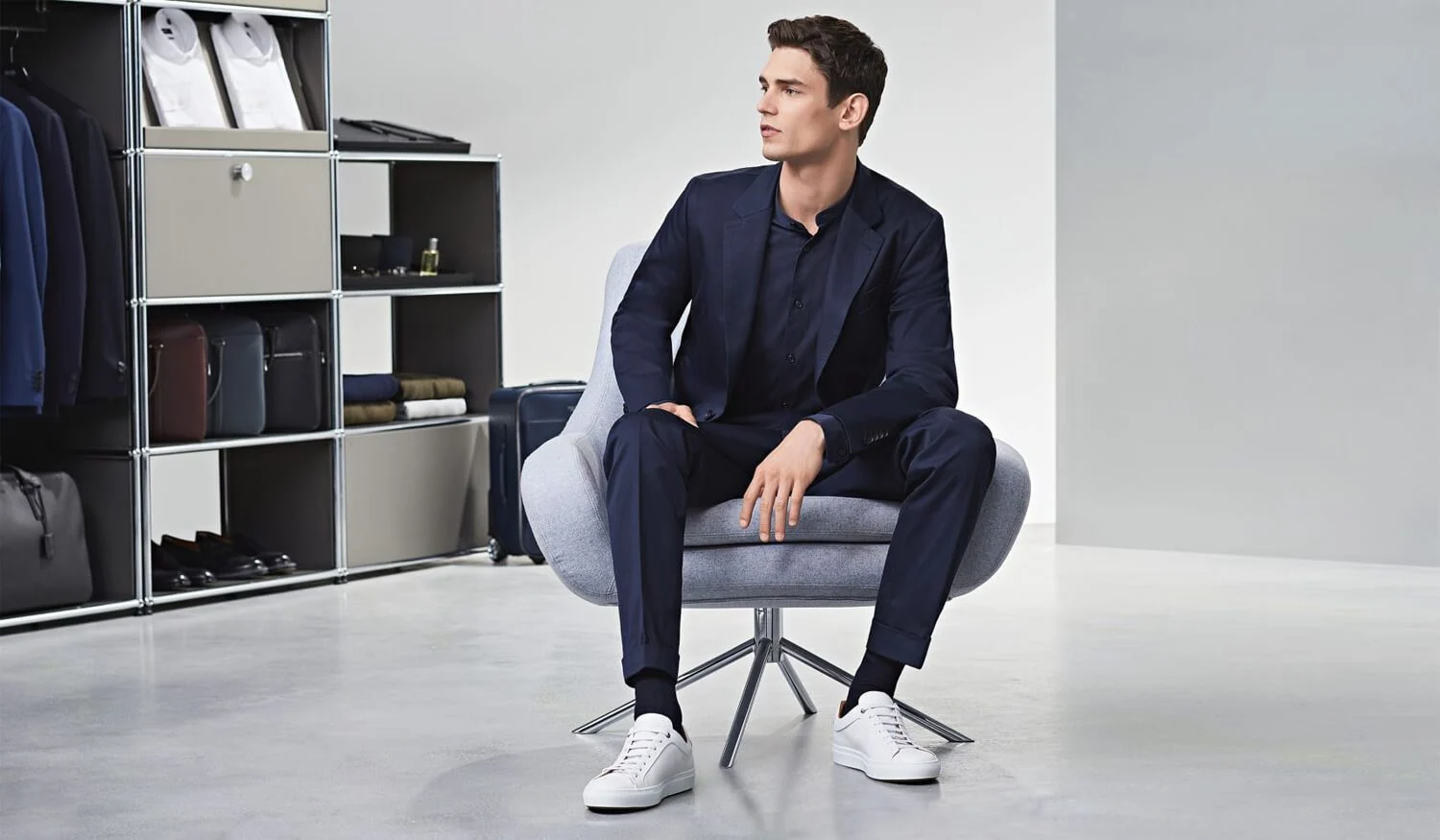
Sneakers with tailoring: how to make it work is the question every minimalist dresser eventually asks once blazers and low-top leather shoes start sharing the same closet. The combination used to be a risky move reserved for stylists and off-duty menswear editors. That’s no longer true. Offices have relaxed, weddings have loosened their dress codes, and sneakers with tailoring now show up on trading floors, at gallery openings, and in boardrooms without raising an eyebrow. The trick is knowing which sneakers earn that trust and which ones just look like an afterthought.
Key takeaways
- Low-top, minimal leather sneakers with a flat sole pair best with tailoring, since bulky soles compete with structured fabric
- Match sneaker tone to the darkest fabric in the outfit rather than the lightest, to keep the look grounded
- Fabric weight should roughly match sneaker weight: heavier wool suits sturdier sneakers, lighter fabrics suit slimmer profiles
- Small details like sock length, lace color, and leather condition decide whether the outfit looks styled or accidental
- Formal evening wear and strict business dress codes still call for traditional shoes rather than sneakers
This guide breaks down the mechanics of sneakers with tailoring: how to make it work, not just survive. It covers silhouette matching, color logic, fabric weight, and the small details that separate a considered outfit from a lazy one. A few examples reference Common Projects, a brand whose minimalist leather sneakers are frequently cited in this conversation, but the principles apply regardless of what’s in your closet.
Sneakers With Tailoring: How To Make It Work Without Overthinking It
Tailoring is built around structure: sharp shoulders, a defined waist, a clean trouser break. Sneakers, by contrast, are soft and low-slung. The contrast is exactly what makes the combination interesting, provided the sneaker isn’t fighting the tailoring for attention. A chunky, multi-panel trainer competes with a blazer’s clean lines. A minimal leather sneaker with a low profile and few visible seams simply supports them.
Think of the sneaker as a punctuation mark, not a paragraph. It should close the outfit down, not open a new conversation. That’s the core logic behind sneakers with tailoring: how to make it work in almost any setting, from a client lunch to a Sunday wedding with a relaxed dress code.
Choosing The Right Silhouette
Silhouette is the first filter. Bulky running-inspired soles, thick foam midsoles, and exaggerated toe boxes read casual no matter what fabric surrounds them. For sneakers with tailoring to look intentional, look for:
- A low-top cut that sits close to the ankle, echoing the trim line of tailored trousers
- A slim, flat sole rather than a raised or platform one
- Minimal branding and stitching, so the eye reads the outfit as a whole rather than jumping to the shoe
- A rounded but not bulbous toe, which keeps the proportions closer to a derby or loafer
Retailers like common projects sneakers tend to sit in this category by design, which is one reason they get name-checked so often when people ask how sneakers with tailoring can actually look deliberate rather than accidental.
Color Logic For Smart-Casual Outfits
Color does more heavy lifting than most people expect. White leather sneakers are the easiest starting point because they read as neutral against navy, charcoal, and mid-grey suiting. Off-white or bone shades soften slightly further and pair well with warmer trouser colors like camel or olive.
Black leather sneakers are trickier. They can look sharp with a black or charcoal suit but tend to flatten a lighter grey or tan outfit, making the whole look feel heavier than intended. A useful rule: match the sneaker’s tone to the darkest fabric in the outfit, not the lightest, so the shoe reads as grounding rather than clashing.
Fabric Weight And Fit Matter More Than People Think
Heavy wool tailoring pairs naturally with sturdier leather sneakers, since both have visual weight. Lightweight tropical wool or cotton-linen blends look better with a slimmer, more delicate sneaker profile, otherwise the shoe overpowers the trouser.
Trouser break matters too. A slight break or no break at all (a modern, cropped cut) shows more of the sneaker and demands a cleaner silhouette. A fuller break hides more of the shoe, giving a bit more room for texture or a slightly chunkier sole without throwing off the balance.
Details That Separate Sharp From Sloppy
Small choices decide whether sneakers with tailoring look styled or accidental. Scuffed leather, visible logos, and mismatched laces all undercut an otherwise good outfit. So does wearing the wrong sock length, which can create an odd gap between trouser hem and shoe.
| Detail | Works | Doesn’t Work |
| Sock length | No-show or thin ankle sock | Athletic crew sock |
| Lace color | Matched to sneaker tone | Bright contrast lace |
| Leather condition | Clean, lightly conditioned | Scuffed or cracked |
| Sole thickness | Slim, flat | Raised, chunky |
Where To Draw The Line
Not every tailored piece invites a sneaker. Formal evening wear, tuxedos, and traditional business suits with a strict dress code still call for oxfords or derbies. Sneakers with tailoring work best in smart-casual territory: unstructured blazers, softer suiting, and separates rather than matched two-piece formal suits. Getting sneakers with tailoring: how to make it work right in these settings usually just means knowing when to leave the sneakers at home.
Shoppers browsing options like common projects shoes alongside other minimalist labels will notice the better pairs share a few traits: full-grain leather, a low vamp, and stitching kept to a minimum. Those traits are what make sneakers with tailoring look considered rather than thrown together.
Frequently Asked Questions
Can white sneakers work with a navy suit?
Yes. White leather sneakers are one of the easiest matches for navy tailoring, especially in a low-top, minimal silhouette with little visible branding.
Are running shoes ever appropriate with tailoring?
Generally no. Running shoes have too much visual bulk and technical detailing to sit well against structured fabric; a flat-soled leather sneaker reads far more intentional.
Should socks be visible with sneakers and trousers?
Usually not. No-show or thin ankle socks keep the leg line clean, which matters more with tailored trousers than with jeans.
Do black sneakers work with grey suits?
Sometimes, but carefully. Black sneakers can flatten a lighter grey suit, so they tend to work better with charcoal or black tailoring instead.
What’s the biggest mistake people make pairing sneakers with tailoring?
Choosing a chunky, heavily branded sneaker. It competes with the suit rather than supporting it, which undoes the whole point of the pairing.