Shipping failures are expensive. Refunds. Returns. Negative reviews. Trust loss. One wrong box can erase a profit margin. That is why strength selection matters more than looks. People compare graphics. Carriers compare data. Real packaging decisions begin with numbers, not color. This guide separates hype from logic. It starts with structure. It ends with results.
Before Anything: Flute Is Not Enough
Most people choose by custom corrugated boxes flute sizes alone. A flute, B flute, C flute, E flute. And they assume flute equals protection. That is incomplete. Flute describes thickness and cushioning pattern but not actual strength rating. Flute is geometry, not guarantee.
Two boxes can have the same flute and completely different performance. Because strength ratings depend on tests, not visuals.
Two Worlds, Two Metrics
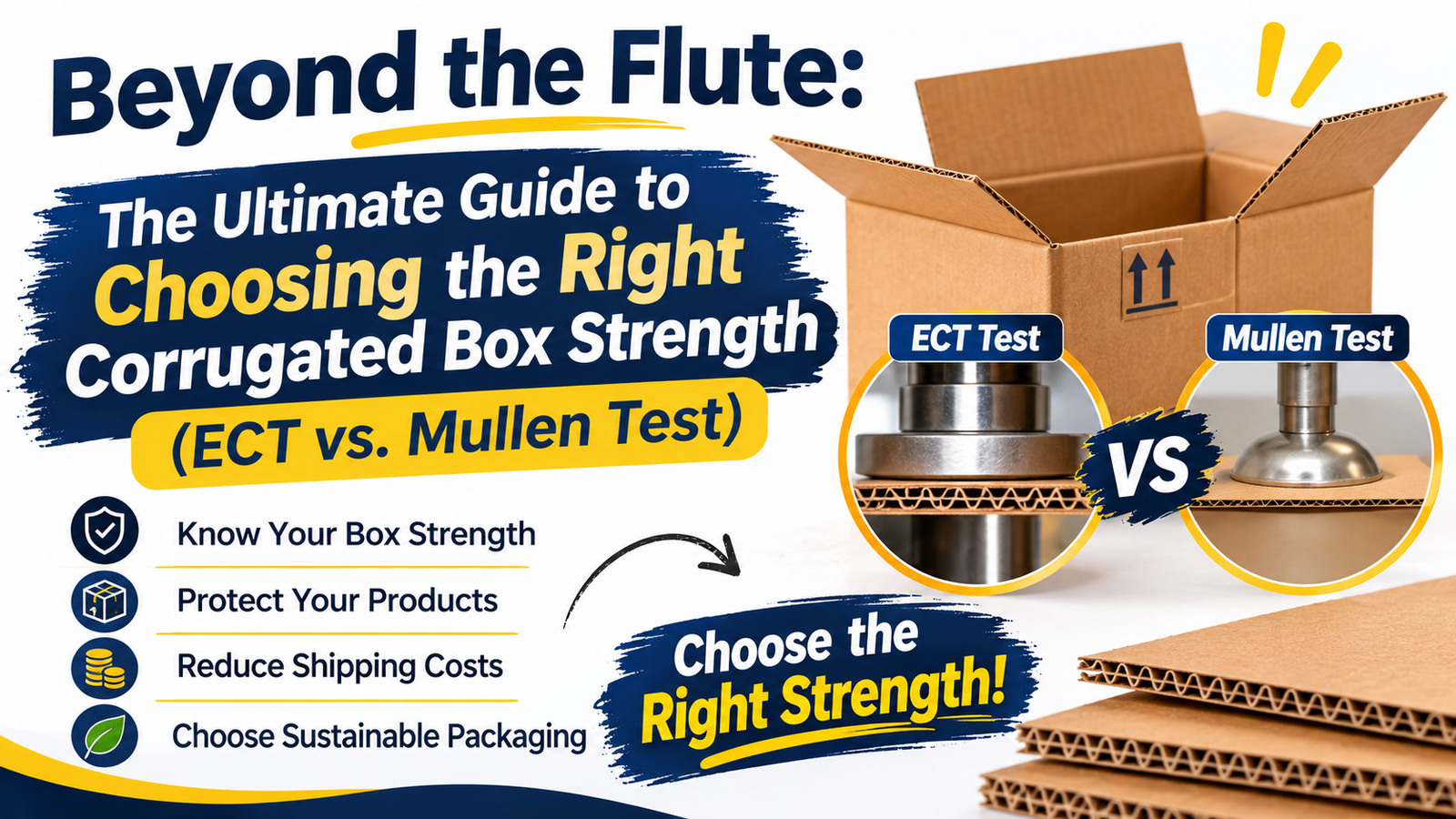
When evaluating box durability, the argument always returns to ECT vs Mullen test. These two methods measure different risks.
Mullen measures bursting from direct pressure. Think internal push or external puncture. Good for scenarios where the box faces compression in one spot.
ECT (Edge Crush Test) measures stacking strength from the sides. Think warehouse palletization and vertical weight. It predicts how well boxes perform under stacking load.
If you ignore use-case, you waste money. You either overprotect and overspend or underprotect and lose shipments.
Understand the Use Case First
No decision without context. Ask three questions:
- This box stacked in warehouses?
- Is this box shipped individually without pallet stacks?
- Is the product fragile, pressure-sensitive, or rigid?
If stacking is dominant, ECT matters more. If accidental side pressure or drop is dominant, Mullen matters more.
This is the real shipping box strength guide — choose based on failure risk, not on habit.
Why ECT Dominates Modern Logistics
Modern supply chains use pallet racks. They stack high to reduce warehouse cost. They ship in bulk. That means edge strength matters more than burst. That is why carriers and wholesalers prefer ECT-certified board.
When people say “minimum compliance needed,” they are talking ECT numbers. Because large carriers approve shipments by stacking standards, not by burst resistance. It matches the actual physical stress pattern.
When Mullen Still Wins
Not every order lives on pallets. Many D2C brands ship parcels individually through parcel couriers. Those boxes are tossed, squeezed, angled, dropped. Sudden impact is more likely than stacking.
That is where Mullen-rated board offers predictable safety. Especially for liquids, jars, sharp-edged products, and rigid metal goods. Burst resistance is the risk to solve here.
So the ECT vs Mullen test answer is not “either.” It is “depends on pipeline.”
Wall Count Matters More Than People Admit
Even with the right test rating, wall construction changes outcomes dramatically. Single wall vs double wall corrugated is not cosmetic. Single wall is for low to medium risk. Double wall is for high fatigue travel, heavy weight, long storage time, or cross-border freight.
People try to compensate weak board with tape or void fill. That is the wrong fix. Strength comes from sheet engineering, not accessories.
Double wall is not overkill when cost of fail is higher than cost of upgrade.
Strength is ROI, Not Expense
Brands see packaging as cost. Logistics teams see packaging as insurance. One broken shipment costs more than dozens of stronger boxes. A reliable box is not luxury—it is risk control.
That is why good engineers choose by numbers. Better stacking = reduce damage shipping. Better burst = reduce leakage and returns. Both outcomes pay for themselves in prevented loss.
A strong box is an unspoken profit protector.
Choosing Corrugated By Logic, Step by Step
Here is a simple decision flow without jargon:
- Will this go on pallets? Yes → prioritize ECT.
- Will this ship single parcel? Yes → prioritize Mullen.
- Will it face both? Choose hybrid spec that passes both minimums.
- Is the cargo heavy or fragile? Upgrade from single to double wall.
- Is failure cost higher than packaging cost? Choose higher grade without hesitation.
That is a real custom packaging— not aesthetic, not marketing, not trend.
Do Not Choose by Price First
The cheapest box is always most expensive long-term. Low strength creates returns. Returns kill CAC, LTV, reputation. Cheap board is false savings.
Customers never ask for stronger boxes, but they leave when deliveries arrive damaged. They do not send complaint about board grade. They silently switch brands.
A better board prevents silent churn.
Integrating Strength With Practical Design
Choosing the right strength does not remove the need for smart construction. Support panels, snug inserts, correct flute orientation, and taping patterns reinforce structural behavior.
People blame carriers for damage. Half of that damage is design negligence. Testing without realistic loading is planning to fail.
Correct corrugated strength is not about material pride. It is about protecting profit, reputation, and repeat purchase. Mullen protects from bursts. ECT protects from stacks. Wall count controls fatigue. Wrong choice punishes brands in silence.
The future of durable packaging decisions belongs to those who understand corrugated box flute sizes.