Introduction
A great leather jacket is more than a fashion statement. It is a dependable outerwear staple that adapts to changing seasons across the United States. From harsh northern winters to mild southern climates, each region affects how a jacket performs. Many shoppers focus on style alone, but the right choice blends climate awareness, durability, comfort, and everyday functionality. This guide breaks down everything needed to make an informed decision, whether someone prefers a bomber jacket, a biker jacket, a sherpa leather jacket, or a cozy shearling leather jacket men designed for colder zones. The goal is to help you choose confidently and use expert insights to select a jacket that lasts years while keeping you comfortable and stylish.
Understanding the Diversity of USA Weather
Weather conditions in the United States shift dramatically from region to region. The Northeast experiences long winters, icy winds, and wet conditions, while the West Coast often offers milder year-round temperatures. The South has humidity and short cold spells, and the Midwest battles temperature extremes. These variations affect how much insulation, lining, and material thickness a leather jacket needs. Warmer climates pair well with lightweight styles, while colder regions require thicker hides and thermal linings. Considering weather patterns helps narrow choices and ensures the jacket functions beyond aesthetics.
How Climate Influences Leather Thickness and Warmth
Leather thickness determines insulation and comfort. A thick hide traps heat effectively, making it a solid choice for northern winters. Lightweight leather suits moderate climates where breathability matters more than insulation. Thicker leather also withstands wind better, providing natural resistance without added bulk. Softer and lighter options work when versatility is important during transitional seasons. Understanding climate helps buyers select a jacket with the right balance of warmth, flexibility, and durability.
Comparing Natural and Synthetic Linings for Seasonal Comfort
Linings play a major role in warmth and comfort. Natural linings like wool, shearling, or cotton regulate temperature well and feel softer against the skin. Synthetic linings often support durability and moisture control. In cold climates, thicker natural linings retain heat more effectively. For moderate or warm regions, lightweight cotton or polyester linings offer breathability without creating extra bulk. Choosing the right lining ensures that a leather jacket adapts to seasonal changes without discomfort.
Popular Leather Jacket Styles and Their Seasonal Strengths
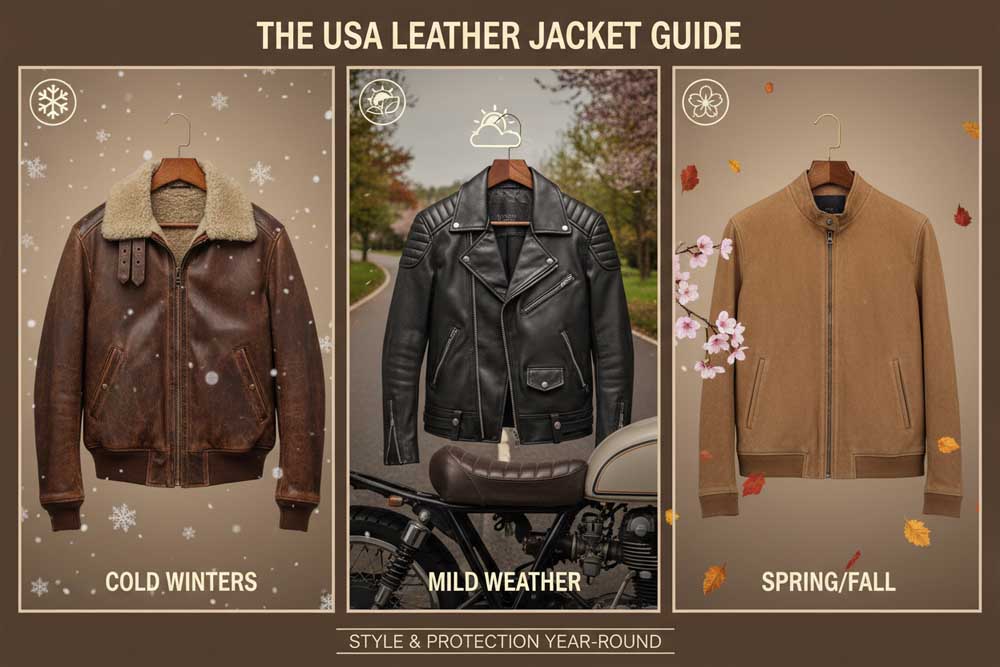
A leather jacket comes in many silhouettes, each offering unique advantages depending on weather and personal style. A bomber jacket is known for its balanced warmth and everyday wearability. A biker jacket offers wind resistance and a structured fit that suits transitional seasons. A sherpa leather jacket provides extra insulation ideal for cold weather. A shearling jacket remains a top choice for deep winter due to its thick lining. Understanding how each style aligns with seasonal needs helps create a wardrobe that supports both comfort and fashion.
Choosing a Bomber Jacket for Mild to Cool Climates
A bomber jacket suits much of the United States thanks to its adaptable construction. Its ribbed cuffs and collar help block wind, and its lightweight structure allows comfortable layering. In coastal or southern regions, a bomber keeps you warm without causing overheating. Those in cooler zones can layer it with knitwear for added insulation. Many modern bombers use soft lambskin that feels light yet durable, allowing year-round appeal with proper layering.
Choosing a Biker Jacket for Windy or Transitional Conditions
A biker jacket originated as protective outerwear, so it naturally handles wind and temperature fluctuations. Its asymmetrical front and compact fit help seal warmth inside. This style works well in transitional seasons like fall and spring across the Midwest and Northeast. It pairs effectively with sweaters or hoodies when extra insulation is needed. For areas with strong winds, a biker jacket offers stability, structure, and practical heat retention without sacrificing mobility or edge.
Choosing a Sherpa Leather Jacket for Extra Warmth
A sherpa leather jacket features a soft, insulating lining that enhances warmth without adding excessive weight. This style is ideal for early winter, late fall, or high-altitude regions where the cold arrives quickly. Sherpa insulation provides a comfortable buffer against chilly winds and maintains warmth during outdoor activities. The blend of leather and sherpa makes this style versatile for casual wear while still offering reliable cold-weather performance.
Choosing a Shearling Jacket for Harsh Winter Regions
A shearling jacket stands out as one of the warmest outerwear options available. Natural shearling regulates heat, absorbs moisture, and delivers insulation unmatched by most materials. Regions like the Northeast, Upper Midwest, and northern Rocky Mountains benefit most from a shearling jacket. The plush lining ensures warmth even during freezing temperatures. Its timeless design adds classic style while functioning as dependable winter armor. High-quality shearling lasts for many years when properly maintained.
Types of Leather Materials and Their Weather Performance
Different hides provide different strengths. Cowhide offers toughness for snowy or windy regions. Lambskin delivers softness and flexibility suitable for milder zones. Goatskin balances durability and comfort well, while sheepskin excels in natural insulation. Selecting the right hide ensures that the jacket aligns with your expected climate. Those in variable-weather states may prefer midweight leather for year-round adaptability, while colder areas benefit from heavier materials.
The Role of Fit and Mobility in Weather Comfort
Comfort depends on more than warmth. A jacket that fits well allows layering without limiting movement. A snug fit blocks wind but should not restrict the shoulders or arms. Slight room in the chest provides comfort when temperatures drop and additional layers are needed. Understanding how fit affects comfort throughout various seasons helps buyers choose a jacket that adapts easily to both warm and cold days without feeling bulky or tight.
Lining Options Explained for USA Climate Needs
Lining choices determine a jacket’s seasonal versatility. Consider the following options:
• Cotton offers light comfort for warm or mild climates.
• Polyester increases durability and moisture control.
• Sherpa provides moderate warmth for early winter.
• Full shearling delivers maximum insulation for very cold regions.
Matching lining type with regional climate ensures that the jacket performs well across seasonal changes without compromising comfort.
Moisture, Rain, and Humidity Considerations
Rain and humidity impact leather performance. Coastal and southern regions experience heavy moisture that can damage improperly treated leather. Jackets with protective finishes resist water better and reduce the risk of cracking. Conditioning also preserves softness and prevents weather-related wear. For those living in humid climates, breathable linings and lighter hides help maintain comfort without trapping heat. Understanding moisture levels ensures long-term durability and comfort.
Comparing Price Points and Quality
A quality leather jacket is an investment that lasts many years. Pricing varies based on hide type, lining, craftsmanship, and brand reputation. Trusted names like Shearling Store, The Jacket Maker, and Wilsons Leather provide options across different budgets while maintaining dependable construction. Higher-quality materials offer longer lifespan and better comfort, making them worthwhile for regions with unpredictable weather. Choosing based on both budget and long-term value ensures satisfaction throughout multiple seasons.
Care and Maintenance for Long-Term Performance
Care routines keep leather soft, durable, and weather resistant. Regular conditioning protects against dryness caused by winter winds. Proper storage prevents moisture buildup in humid climates. Wiping the jacket after exposure to rain reduces long-term damage. These steps maintain the jacket’s appearance and performance, ensuring that it continues to provide comfort through seasonal shifts. Good maintenance supports the value of the investment.
Expert Opinion and Climate-Based Recommendations
Industry experts recognize that USA weather requires a strategic approach when selecting a jacket. For northern states, insulated options like shearling and sherpa are strongly recommended due to their natural warmth. Experts suggest midweight leather for midwestern and coastal regions that experience varied temperatures. For southern states, lightweight bombers and soft lambskin jackets offer breathability without compromising style. Consistent care and moisture protection also support longevity across all climates.
Conclusion
Selecting the right leather jacket for USA weather involves balancing climate needs, lining choices, material quality, and personal style. Each region brings unique temperature patterns that influence which jacket performs best. Whether choosing a bomber jacket for mild climates, a biker jacket for transitional seasons, a sherpa leather jacket for early winter, or a shearling jacket for cold northern states, understanding these factors ensures long-term comfort and satisfaction. For reliable quality and craftsmanship, Shearling Store provides a wide selection of jackets suitable for every region. Use $25 off with code SJS25 on your next purchase.
Frequently Asked Questions
Which leather jacket style is best for cold states like Minnesota or New York?
Shearling jackets offer the strongest insulation and regulate temperature well, making them ideal for harsh winters.
Are bomber jackets suitable for warm climates?
Yes. Their lightweight structure makes them comfortable in mild or warm regions, especially when lined with cotton.
Is lambskin durable enough for winter?
Lambskin is soft and flexible but less insulating than cowhide or sheepskin. It works well for moderate climates.
How long does a good leather jacket last?
With proper care, a high-quality jacket can last ten to twenty years or more.
Should leather be treated for rainy climates?
Yes. Conditioning and protective sprays help prevent damage from moisture and maintain long-term durability.