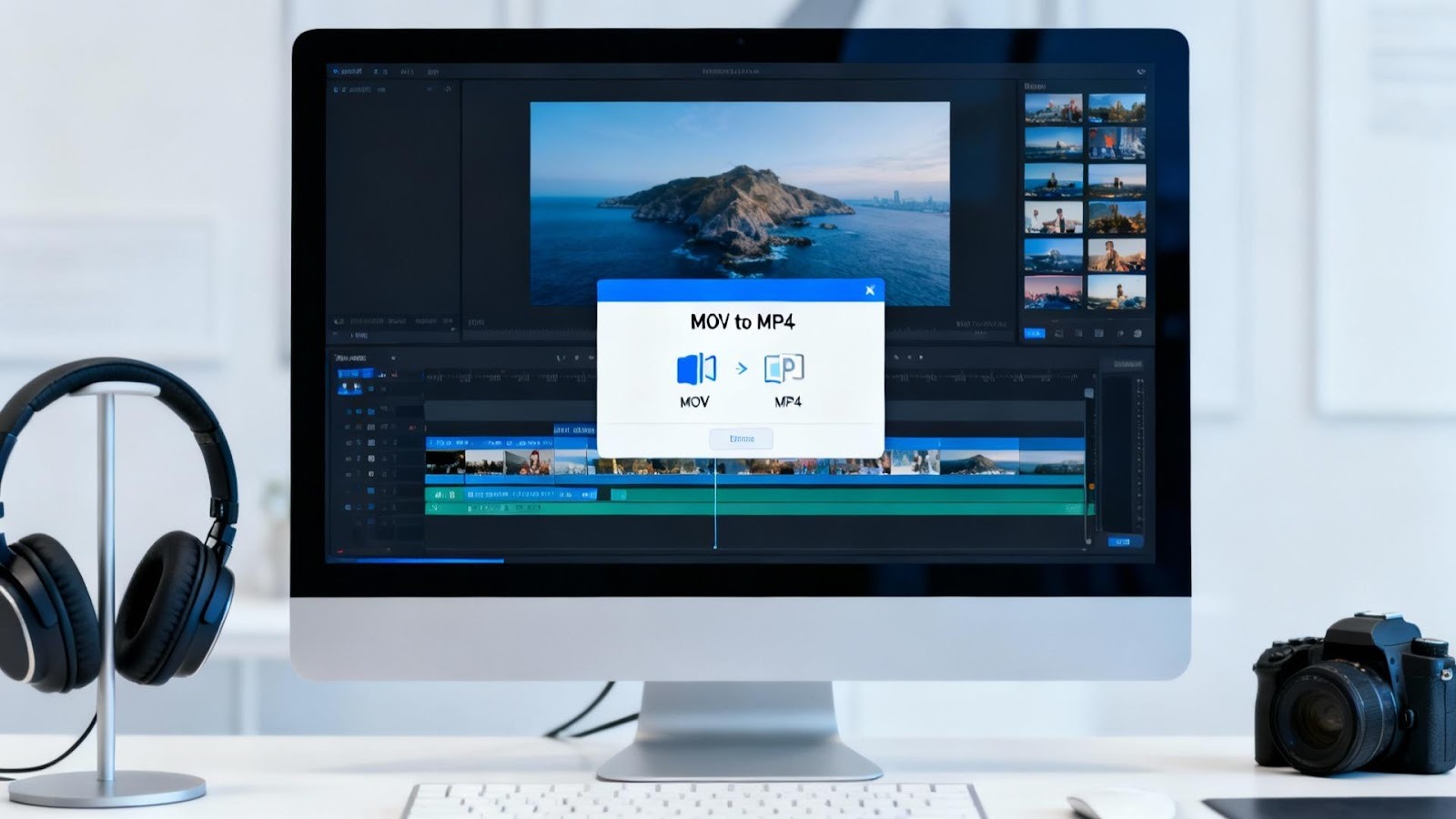
Have you ever experienced an issue of playback slowing or stuttering with a MOV file? You’re not alone. Converting MOV to MP4 for free stock videos is one of the smartest ways to improve playback speed, reduce file size, and ensure smooth performance across websites, social platforms, and editing tools.
Apple created MOV that is compatible with macOS and iOS, but it tends to create issues with Windows and Android devices. In the meantime, the MP4 video compression format using either H.264 codecs or H.265 (HEVC) codecs shines in web browsers, media players, streaming sites, and social media sites like YouTube.
MP4 saves space and does not produce any apparent loss in quality, and guarantees the seamless playback of videos when shared and streamed online. This guide explains how to convert MOV to MP4 without losing quality, especially when working with stock footage and web-ready video content. We can optimize your video creation process, increase your search efforts, and improve your user experience (UX) through faster and more professional video editing and optimization of content.
MOV vs MP4: Compatibility, Compression, and Performance
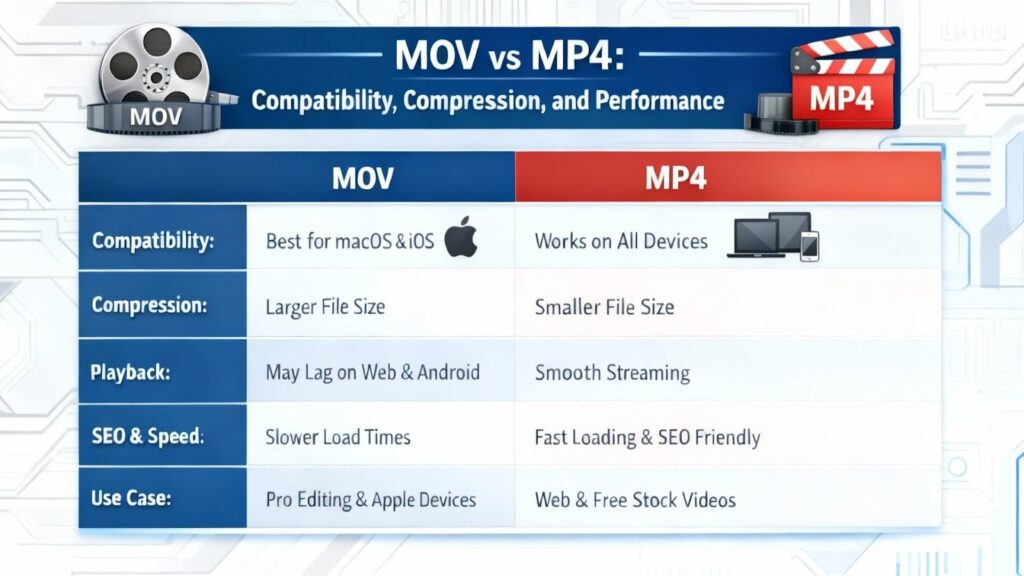
Table 1. Comparison of MOV vs MP4 video formats on compatibility, compression, and performance
MP4 is more compatible and compressible. It has sophisticated compression algorithms to reduce videos and retain quality. MOV files tend to play back incorrectly or be slow outside Apple Devices.
Why Convert MOV to MP4 for Free Stock Videos and Web Publishing
For content creators, it is really essential to convert MOV to MP4. The majority of video hosting services, like YouTube, accept MP4 since it helps with faster streaming and high-quality video production. MP4 makes video seamless for web hosting, email campaigns, and presentations.
Key Benefits of MP4
- Compatible everywhere: Plays on all devices and browsers
- Efficient Compression: shrinking file size with no loss to quality.
- SEO benefits: Fast-loading videos increase engagement and rankings.
- Optimized Streaming: Streaming is designed to use H.264/HEVC codecs only.
Common Use Cases for Converting MOV to MP4
The primary reasons why creators convert MOV to MP4 are:
- Posting videos on websites, blogs, and landing pages.
- Editing works that have free stock footage.
- Producing video content that is marketing and SEO friendly.
Best Free Methods to Convert MOV to MP4 Online
Converters on the web are fast and do not require installation. You just upload your MOV, convert it to MP4, and download. These tools are effective with short free stock videos.
However, do not upload sensitive information as files are processed in external servers, which raises privacy concerns.
Offline Tools to Convert MOV to MP4 Safely
The desktop version of video converters and editing software provides a higher level of control. You can change your Bitrate, Frame Rate, and Resolution accurately. The use of Offline tools provides more security and enables the handling of large files.
How to Convert MOV to MP4 for Free Stock Videos Without Losing Quality
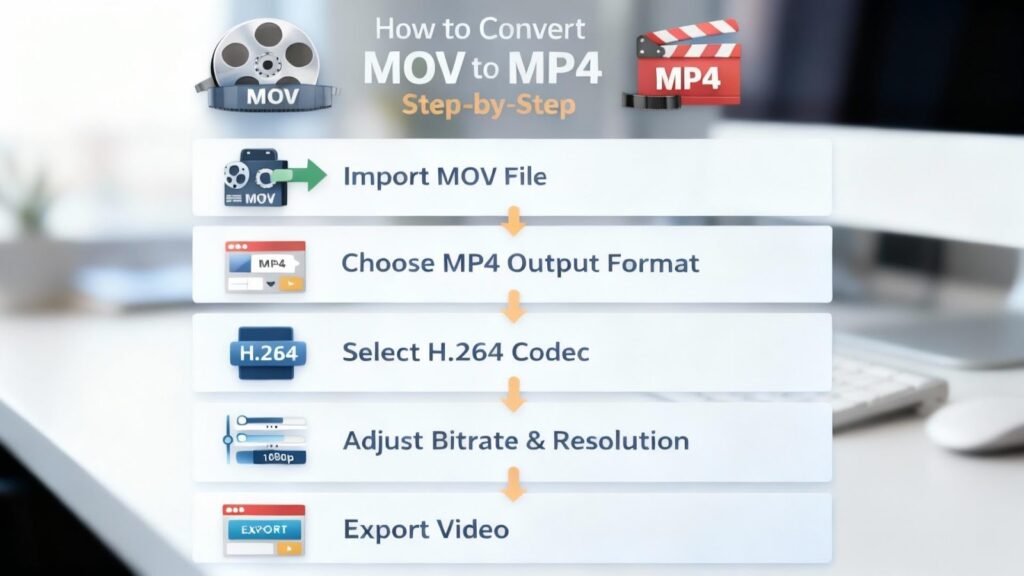
Step-by -step process to convert MOV to MP4
- Open your converter or video editor.
- Import the MOV file.
- Choose MP4 as the output format.
- Select the H.264 for compatibility.
- Original resolution and frame rate.
- Adjust the bitrate to the desired quality.
- Export and preview your video.
The steps will maintain original quality and can prevent compression problems.
How to Maintain Video Quality During MOV to MP4 Conversion
Avoid:
- Lowering resolution.
- Changing the frame rate unnecessarily.
- Over-compressing videos.
Use “same as source” options when available to keep videos sharp and clients happy.
Recommended MP4 Settings for Web and Stock Videos
- Codec: H.264
- Resolution: 1080p (1920×1080)
- Frame rate: 24–30 fps
- Bitrate: 8–12 Mbps
- Audio: AAC format
These specifications suit most web platforms, including YouTube and social media.
What Are Free Stock Videos and Their Licensing Types?
Free stock videos are recorded videos with a royalty-free or Creative Commons license that are not subject to any ongoing fees and can be used by creators without any fee.
Where to get High Quality Free Stock Videos
High quality platforms provide 4K and HD clips. These platforms are updated regularly with cinematic shots and smooth motion.
Legal, Ethical, and Security Considerations for Free Stock Videos
Always read stock video licenses to verify commercial use rights and attribution needs. Offline converters are more privacy controlled in case of sensitive or client footage. Ethical use safeguards brand loyalty and is aligned with the EEAT of Google.
How Content Creators Use Free Stock Videos Effectively
Smart creators combine stock footage with new content. This keeps videos authentic and engaging instead of relying solely on stock.
Free Stock Videos for Marketing and Branding
Free stock footage videos reduce the cost and improve production speed. Small teams can produce professional videos to increase social-media engagement, as well as SEO.
Combining Converted MP4 Videos Using Free Stock Footage
Convert MOV files to MP4 before editing. Doing so prevents a problem with playback errors and crashes. A consistent frame rate and format make editing smoother and are essential for blending clips.
Editing Tips for Combining Stock Videos and Original Content
- Match color grading.
- Align frame rates.
- Use subtle motion effects.
- Apply overlays sparingly.
These little touches give it a polished, purposeful appearance.
SEO Benefits of MP4 Videos to Websites
MP4 results in improved website performance because they load faster and support video indexing.
Video Optimization Best Practices for Google, AEO, and AI Overviews
Add transcripts, use structured data, and have videos close to related text. These steps help search engines understand your content and aim to improve the search results driven by AI.
How Video Content Enhances Engagement and GEO Visibility
Localized videos with captions reach out to more users and build trust. Fast playback will keep your visitors as long as possible on your page, increasing your GEO visibility and your local search rankings.
Website Performance and Page Speed Plus of MP4
MP4 is faster to load compared with MOV to enhance Core Web Vitals (important ranking signals from Google). Faster pages increase user satisfaction (and decline the bounce rate).
Common Mistakes to Avoid When Changing and Using Stock Videos
- Over-compressing videos.
- Ignoring licensing rules.
- Uploading huge video files.
- Mixing inconsistent frame rates.
Avoid these mistakes to protect your SEO.
Smart Tips from Video Editors and SEO Experts
Standardize MP4 use. Optimize once, reuse everywhere. Prioritize performance to scale your content creation workflow efficiently.
FAQs
Why should I convert MOV to MP4?
MP4 is supported on more devices, is smaller in file size, and is also faster in playback.
How to convert MOV to MP4 without losing quality?
Always use reliable tools, maintain original resolution and frame rate, and use the H.264 codec.
Does converting to MP4 reduce quality?
Only if resolution drops or videos are over-compressed; otherwise, quality stays.
What software converts MOV files to MP4?
HandBrake, VLC, Adobe Premiere Pro & CapCut, as well as free online converters, are popular.
Which video format is best?
MP4 is best for web and social media due to compatibility and SEO benefits.
Conclusion
MOV files have excellent quality, but they are not always suitable for use online. Converting MOV to MP4 for free stock videos guarantees you faster loading, greater compatibility, and higher platform performance in terms of SEO. Using the appropriate settings and tools, creators are able to create high-quality videos in a professional manner and with confidence and consistency.
Disclaimer:
The information provided in this article is for educational and informational purposes only. We do not endorse any specific software or online tool, and results may vary depending on the video files and conversion methods used. Always ensure that you respect copyright laws and the licensing agreements of stock videos. We are not responsible for any loss, damage, or legal issues arising from the use of the tools or methods mentioned.