Table of contents:
- The User Experience Gap: Four Pictures Feels “Normal”, One Feels Tight
- Thinking Model vs. Gambling Model: One Actually Uses Its Brain
- Precision Over Quantity: No More “Close Enough”
- Nano Banana Flash vs. Nano Banana Pro: Choose Your Poison
- Multi-Turn Editing: Not Fake Choice, Real Power
- Final Jab: Quantity Is a Cope, Intelligence Isn’t
Let’s be real for a hot second. You chuck a prompt into almost any basic-bitch AI image generator and what do you get? Four half-assed variations that look like they were whipped up during someone’s miserable vodka breakfast. One has the right vibe but the colors are a total train wreck, another gets the palette right but the perspective’s gone completely AWOL, and the last two are just straight-up cursed sleep-paralysis demons. You sigh, pick the least-disgusting corpse of an image, and try to forget you ever saw it.
Then there’s Nano Banana 2 showing up like it’s way too sophisticated for that garbage. One photo. One singularly smug rectangle. Not a grid in sight. No safety net, no participation trophies. Just one shot and a little “there you go, darling, don’t spend it all in one place.”
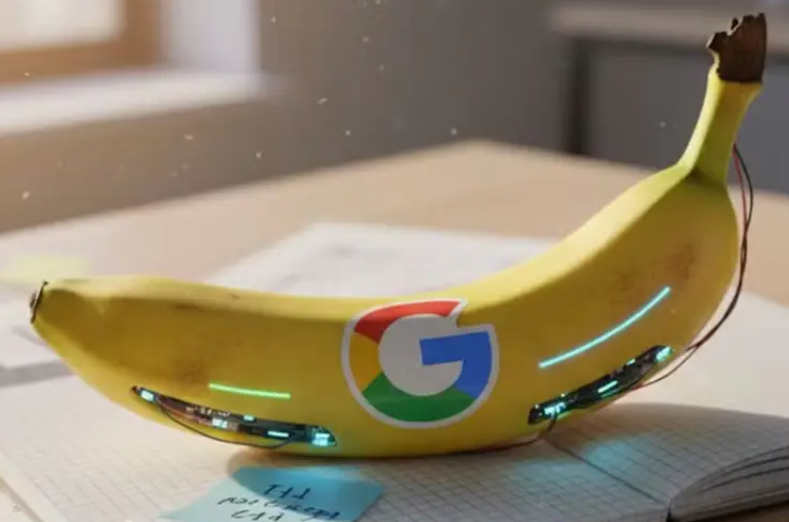
Nano Banana 2 wants your first result to be the one you actually keep. No gambling, no slot machines. Let’s dig into why this single-image pose pisses people off so much… and why it’s probably the future, whether your fragile ego wants it or not.
The User Experience Gap: Four Pictures Feels “Normal”, One Feels Tight
If you’ve ever messed with Doubao, Midjourney’s old-school grids, or even DALL·E’s four-pack special, your muscle memory is primed for excess. Prompt → wait → four thumbnails drop → swipe, zoom, complain, pick the best of the worst. It’s the fast-food drive-thru of image gen. You feel in control. You have “agency,” or whatever lie you tell yourself. Even if three of them are absolute trash, you still feel like you “chose” something.
Now change to Gemini and ask for Nano Banana 2. You get one crisp image. That’s it. No carousel, no sideways gallery. Your lizard brain goes: “Oi, where’s the rest of my buffet?” Options feel like safety; one image feels like vulnerability. It’s psychological, right? Having four feels like hedging your bets; having one feels like the AI is forcing you to trust it. And let’s be honest, most people don’t trust AI as far as they can throw it. Fair enough.
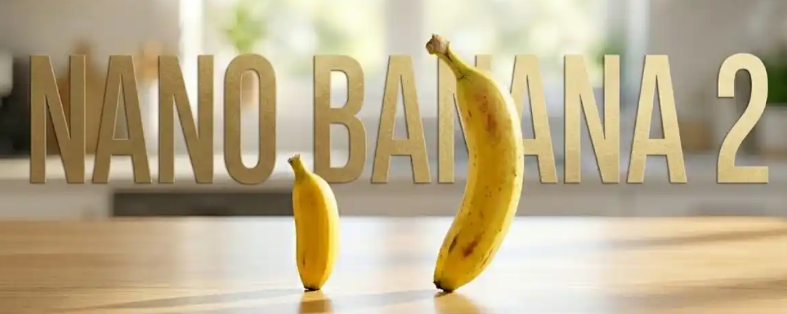
But the savage truth is, that four-shot buffet was never a real choice. It was just Probability Batching disguised as being “nice.” The model rolls the dice a few times at low confidence, praying that some statistically lucky throw results in something that doesn’t look like a nightmare. Nano Banana AI saw this circus, rolled its eyes, and said, “We’re done with the amateurs now.” Inside Gemini, Nano Banana 2 is tuned to give you one confident, reasoned answer. It’s a sniper versus a “spray-and-pray” drunk. Arrogant? Totally. Effective? Hell yeah.
Thinking Model vs. Gambling Model: One Actually Uses Its Brain
The real reason Nano Banana 2 refuses to vomit four images is embarrassingly simple once you peek behind the curtain: it actually thinks before it draws. Your average diffusion model hears “a cyberpunk fox DJing in a rainy neon alley with exactly three floating lanterns” and just goes “uh, noise → denoise → pixels → whatever.” Zero forethought. Maximum vibes. Maximum screw-ups.
Nano Banana 2 does something radically different. It stops. It reasons. It builds an internal 3D-ish understanding of the scene:
- Where’s the fox actually standing?
- Are the lanterns floating or just badly photoshopped in?
- Is the rain directional or just some aesthetic splatter?
- Are there reflections on the wet pavement that actually match the neon sources?
That chain-of-thought step drinks compute like a V8 on a bender — just one properly reasoned image is already taxing the hell out of your hardware.
Precision Over Quantity: No More “Close Enough”
Why not just supply us with four anyway? Because Nano Banana 2 is low-key flexing its new spatial IQ. Request something finicky from most models, like: “A vintage typewriter with exactly seven gold keys, placed behind a half-full teacup on a windowsill at golden hour.”
- “Five red books on the left shelf, three blue on the right” → actually happens.
- “Cat sitting between two dogs, slightly closer to the black dog” → nailed it.
- “Blue fountain pen resting behind—not beside—the red mug” → no floating nonsense.
Once the model reaches that level of pedagogical precision, the whole “gimme four variants” justification starts to ring hollow. Nano Banana Pro isn’t cloaking failure in sheer volume—it’s eradicating the need for volume altogether.
Nano Banana Flash vs. Nano Banana Pro: Choose Your Poison
The Nano Banana AI family isn’t some monolith; different flavors serve different moods.
Nano Banana Flash is like your ADHD cousin—quick, snappy, single-image bursts. Need twenty variations in five minutes? This is your guy. It’s the fast version of us when we’re just brainstorming, mood-boarding, or sometimes just messing about.
But Nano Banana Pro? That’s the one that actually means business. Longer generation time, sure, and still just one image, but sweet Jesus, the detail. Sub-surface scattering on skin, architectural perspective that doesn’t make your eyes bleed, fabric weave that actually makes sense, and text on signs that isn’t some weird alien gibberish. Our batch models sometimes luck into one good frame out of four. Nano Banana Pro does it on purpose, in one fly-by. Speed demons go with Flash; perfectionists move to Pro and never look back.
Multi-Turn Editing: Not Fake Choice, Real Power
Still yearning for your grid? Nano Banana 2 grants you a different kind of power: real conversation. Start with an image that sings. Then, direct it like you’re a frustrated director on set:
- “More warmth in the grade, more golden-hour glow.”
- “Move the skateboarder two steps left, add a motion blur.”
- “Swap the tiny hat for a tophat, keep everything else the same.”
Because Nano Banana AI maintains freakish character and scene consistency across turns, the edits feel coherent, not like a lottery where every new batch looks like a cousin a few times removed. I’m sculpting one vision across the dialogue. It’s slower than swiping across four thumbnails… but it’s infinitely more accurate.
Final Jab: Quantity Is a Cope, Intelligence Isn’t
Let’s wrap this with zero sugar-coating. The traditional four-image grid is a crutch for brain-dead models. Nano Banana 2 is the first mainstream generator to just say “screw it.” It’s a little terrifying, like trading your training wheels for a real bike. But once you stop whining and actually start iterating, you realize 90% of the old workflow was just a performance.
Competitors hide their low spatial IQ behind volume. Nano Banana 2 brings high spatial IQ so volume becomes optional. As the Nano Banana Flash AI updates arrive—and they come thick and fast—the thinking step will become so snappy that arguing about “one vs four” will feel as relevant as discussing whether black-and-white TV was better than color. Spoiler: it wasn’t.
So the next time Nano Banana 2 passes you a single perfect image instead of four mediocre guesses? Don’t whinge. Smile. You’re finally working with something that isn’t winging it. Your prompts deserve better. And now they’re finally getting it.
Disclaimer
This article is intended for informational and commentary purposes only. The opinions expressed herein reflect the author’s perspective and are not official statements from, or endorsed by, Nano Banana, Nano Banana 2, Nano Banana Flash, Nano Banana Pro, Doubao, Midjourney, DALL·E, Gemini, or any other referenced platform or brand.
All product names, trademarks, and registered trademarks mentioned are the property of their respective owners. References to competing tools are made solely for comparative and illustrative purposes. Feature descriptions, performance claims, and capabilities are based on publicly available information and user experiences at the time of writing and may change without notice as AI technologies evolve.