
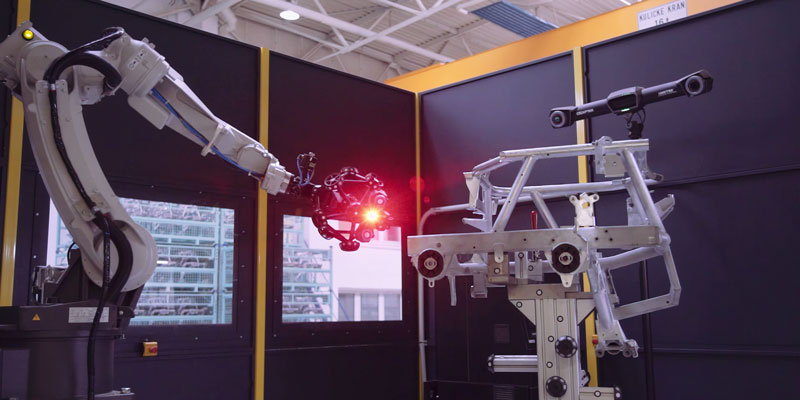
California has become one of the leading regions driving the next generation of industrial innovation. From advanced semiconductor fabs and aerospace facilities to EV manufacturing and medical device production, manufacturers across the state are rapidly embracing intelligent automation technologies to improve quality, efficiency, and scalability.
At the center of this transformation is the rise of the AI-Powered Machine Vision System a technology redefining how products are inspected, measured, and validated in modern production environments. Combined with advanced quality inspection automation, machine vision is enabling California manufacturers to achieve higher throughput, micron-level precision, and real-time defect detection without relying solely on manual inspection.
As manufacturing processes become faster and more complex, traditional inspection methods struggle to keep pace. AI-driven inspection systems now provide the speed, consistency, and intelligence needed to support modern smart factories and Industry 4.0 initiatives.
This article explores how machine vision and automated inspection technologies are transforming manufacturing in California and why businesses are increasingly investing in intelligent inspection solutions.
The Growing Demand for Inspection Automation in California
California’s manufacturing industries operate in one of the world’s most competitive environments. Manufacturers face constant pressure to:
- Increase production speed
- Improve product quality
- Reduce operational costs
- Meet strict regulatory standards
- Minimize product recalls and warranty claims
Traditional manual inspection processes often create bottlenecks in high-speed manufacturing environments. Human inspectors may miss defects due to fatigue, inconsistency, or subjective judgment. According to Intelgic, manual inspection systems cannot keep up with modern manufacturing requirements, particularly in industries requiring continuous production and micron-level accuracy.
To overcome these challenges, companies are increasingly adopting Inspection Automation technologies powered by machine vision and AI.
What Is an AI-Powered Machine Vision System?
An AI-Powered Machine Vision System combines industrial imaging hardware, intelligent software, and automation technologies to enable machines to visually inspect products with exceptional speed and precision.
These systems typically include:
- Industrial cameras
- Specialized lighting systems
- High-performance lenses
- Motion control systems
- AI-powered defect detection software
- Real-time analytics dashboards
Unlike conventional vision systems that rely on fixed rules, AI-enabled systems use deep learning algorithms trained on large datasets of defective and non-defective products. This allows them to identify subtle anomalies and continuously improve inspection accuracy over time.
Modern machine vision platforms can detect:
- Surface scratches and dents
- Cracks and fractures
- Missing components
- Misalignments
- Dimensional deviations
- Color inconsistencies
- Contamination and foreign particles
Intelgic’s AI-powered systems, for example, are capable of detecting defects ranging from 10 microns to 10 millimeters in size using integrated hardware and software platforms.
Why Quality Inspection Automation Matters
Modern production lines operate at speeds far beyond human inspection capability. In sectors such as electronics, automotive, aerospace, and medical manufacturing, even a small defect can lead to:
- Product failure
- Safety risks
- Expensive recalls
- Brand damage
This makes quality inspection automation essential for maintaining consistent production quality.
Automated inspection systems provide several key advantages:
1. Elimination of Human Error
Human inspectors can become fatigued during repetitive tasks, leading to missed defects and inconsistent inspection results. Automated systems perform inspections with the same level of accuracy continuously.
2. Higher Production Throughput
AI-driven inspection systems can inspect hundreds or thousands of products per minute without slowing down the production line.
3. Real-Time Decision Making
Modern systems provide instant pass/fail analysis, enabling manufacturers to identify quality issues immediately and reduce downstream waste.
4. Data-Driven Manufacturing
Inspection systems generate valuable production data that can be used for:
- Defect trend analysis
- Process optimization
- Root cause analysis
- Predictive maintenance
Intelgic’s analytics platform includes cloud-connected dashboards, defect heatmaps, and production line comparison tools to help manufacturers improve operational efficiency.
Key Components of Modern Machine Vision Systems
Industrial Cameras
Machine vision cameras capture high-resolution images of products during production.
Common camera types include:
- Area scan cameras
- Line scan cameras
- 3D cameras
- Boroscopic imaging systems
These cameras are optimized for different inspection tasks and production environments.
Advanced Lighting Systems
Lighting is one of the most critical elements in machine vision inspection.
Manufacturers use specialized lighting setups such as:
- Dome lighting
- Coaxial lighting
- Dark field illumination
- Collimated lighting
Proper lighting helps reveal fine defects and ensures inspection consistency.
AI and Deep Learning Software
AI software acts as the intelligence layer of the system.
These platforms perform:
- Defect detection
- Classification
- Measurement
- Pattern recognition
- OCR and barcode reading
Deep learning models improve over time as they process more production data.
Robotic Motion Systems
Many inspection applications require synchronized movement between products and cameras.
Modern systems use:
- Multi-axis robotic rails
- Conveyors
- Rotary inspection stages
- Precision actuators
These motion systems enable complete 360-degree inspection of complex products.
Applications Across California Industries
Semiconductor Manufacturing
California’s semiconductor industry relies heavily on AI-powered inspection systems for:
- Wafer inspection
- Solder joint analysis
- PCB verification
- Microscopic defect detection
Micron-level accuracy is critical in semiconductor production environments.
Automotive and EV Manufacturing
Electric vehicle production requires advanced inspection systems for:
- Battery cell inspection
- Surface defect detection
- Weld quality verification
- Assembly validation
AI-driven machine vision helps ensure reliability and safety in automotive manufacturing.
Medical Device Manufacturing
Medical manufacturers use automated inspection systems for:
- Surgical instrument inspection
- Catheter verification
- Packaging validation
- Sterility compliance
Automated inspection improves traceability and supports regulatory compliance standards such as FDA and ISO requirements.
Aerospace Engineering
Aerospace manufacturers depend on machine vision systems to inspect:
- Composite materials
- Structural components
- Turbine blades
- Surface coatings
Automated inspection improves quality consistency while reducing inspection time.
The Role of AI in Smart Manufacturing
AI has become a key driver of smart manufacturing initiatives across California.
Traditional rule-based vision systems often struggle with:
- Product variability
- Complex defect patterns
- Changing lighting conditions
AI-based systems adapt dynamically by learning from real production data.
Research shows that AI-powered visual inspection systems significantly improve manufacturing efficiency while reducing manual programming and setup requirements.
AI also enables:
- Predictive quality analysis
- Adaptive inspection models
- Automated defect classification
- Intelligent process feedback loops
This helps manufacturers move from reactive quality control to proactive process optimization.
Challenges in Inspection Automation
Despite the benefits, implementing machine vision systems presents several challenges.
Data Collection and Training
AI systems require high-quality labeled datasets for effective training.
Industry experts note that successful inspection systems depend heavily on diverse and accurate training data.
Lighting and Imaging Complexity
Lighting configuration is often one of the most difficult aspects of machine vision implementation. Improper lighting can reduce inspection accuracy significantly.
System Integration
Manufacturers must integrate machine vision systems with:
- PLCs
- MES systems
- ERP platforms
- Robotics controllers
Proper integration ensures seamless communication across the production environment.
The Future of Inspection Automation in California
The future of manufacturing in California will be increasingly driven by:
- Edge AI processing
- Cloud-connected inspection platforms
- 3D machine vision systems
- Autonomous robotics
- Digital twin technologies
Factories are evolving into fully connected ecosystems where AI continuously monitors production quality and optimizes manufacturing processes in real time.
As production complexity continues to increase, Inspection Automation will become a core requirement for maintaining competitiveness and product quality.
The adoption of the AI-Powered Machine Vision System is transforming manufacturing across California. By combining AI, advanced imaging, and intelligent automation, manufacturers can achieve faster inspections, higher accuracy, and real-time quality control across complex production environments.
Modern quality inspection automation systems eliminate human inconsistency, improve traceability, and enable data-driven manufacturing decisions that support long-term operational excellence.
As California continues to lead innovation in smart manufacturing and Industry 4.0, intelligent vision systems and automated inspection technologies will remain at the center of the next industrial revolution.